
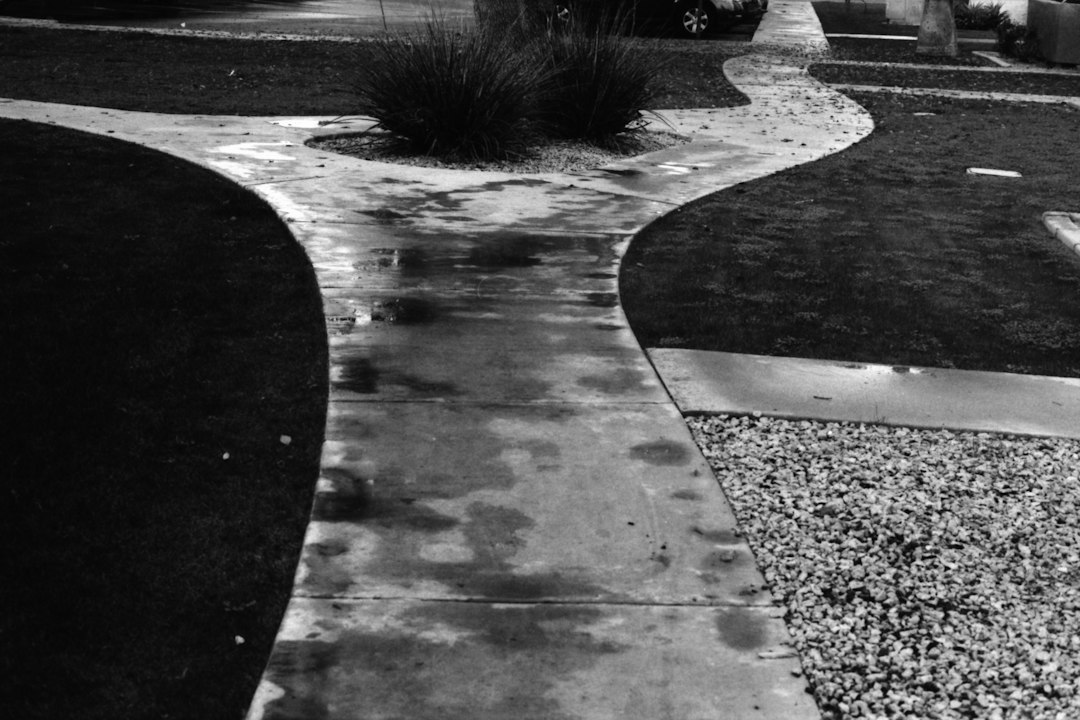
A concrete walkway connects the parts of a property that people use every day: the driveway, front door, garage, patio, garden, and side yard. A thoughtfully planned path can make those trips easier while adding structure to the landscape. A poorly planned one can create puddles, awkward turns, slippery patches, and edges that become trip hazards.
Before selecting a color or decorative finish, consider how people will move through the space and how rainwater will behave. Good walkway design balances comfort, drainage, durability, and the style of the home.
Map the Route People Actually Take
Observe how household members and visitors approach the entrance. A path that follows the natural route is more likely to be used than one that forces people to cut across lawn or navigate tight turns. Consider deliveries, trash bins, garden access, and the connection between parking and the front door.
Mark the route with a garden hose or temporary stakes and walk it at different times of day. Check for conflicts with tree roots, utility access, gates, and existing steps. Small layout changes before excavation can make a major difference in daily convenience.
Choose a Comfortable Width
The appropriate width depends on the path’s purpose, expected traffic, available space, and any accessibility requirements. A narrow garden path may serve one person, while a primary entrance route may need room for two people to pass comfortably. If the walkway must meet accessibility standards, confirm the applicable dimensions, slope, cross-slope, and landing requirements with a qualified professional.
Think about how the path will be used in winter too. A route that is easy to shovel and clear of obstructions is safer than one with narrow bottlenecks or many decorative corners.
Plan Slope and Drainage Together
The surface should shed water without directing it toward the house or creating a stream across another walking area. The correct slope depends on the site and any applicable accessibility rules. Too little slope can leave puddles; too much can make the path uncomfortable or difficult to navigate.
After a rainstorm, look for water collecting near the foundation, at the bottom of steps, or along the walkway edge. Consider downspouts and surrounding garden beds as part of the same drainage plan. A contractor should explain how the finished elevations will connect to the existing surfaces.
Select a Suitable Surface Texture
A broom finish is a common choice for outdoor concrete because it provides texture without a complicated pattern. Decorative finishes can also work, but a very smooth or polished surface may be unsuitable where rain, leaves, snow, or ice are expected. Ask the installer how the chosen finish performs when wet and how it should be maintained.
Color and pattern should complement the house rather than compete with it. A simple border or restrained texture can create visual interest while keeping the walking surface easy to use.
Prepare the Base and Plan the Joints
Walkways need stable support just like other concrete slabs. The contractor should remove unsuitable material, prepare and compact the base as specified, and account for roots and drainage. Control joints help manage where shrinkage cracks occur; their layout should reflect the walkway’s dimensions and geometry.
Tree roots and settlement can affect a path over time. Where a mature tree is close to the route, discuss root protection and the long-term layout before excavation begins.
Think About Edges and Landscaping
Grass, mulch, gravel, and planting beds each meet concrete differently. Plan the edge so soil and mulch do not wash onto the walkway and water does not become trapped against the slab. Keep plants from blocking sightlines or creating a slippery layer of fallen leaves.
Lighting can improve visibility at night, particularly near steps and changes in level. Fixtures and wiring should be planned before the walkway is poured.
Keep Maintenance Simple
Sweep away leaves, remove dirt with a suitable cleaner, and watch for cracks or areas where water pools. Avoid aggressive cleaning methods that can damage the surface. In winter, use appropriate snow-removal tools and follow the concrete and de-icer manufacturer’s guidance.
Make the Path Work Year-Round
A successful walkway follows a natural route, offers comfortable space, drains correctly, and uses a surface appropriate for the climate. Confirm the design, base preparation, joint layout, and elevations with your contractor before work starts. By planning around everyday movement and seasonal maintenance, you can create a path that is attractive without sacrificing safety or durability.
Leave a Reply