
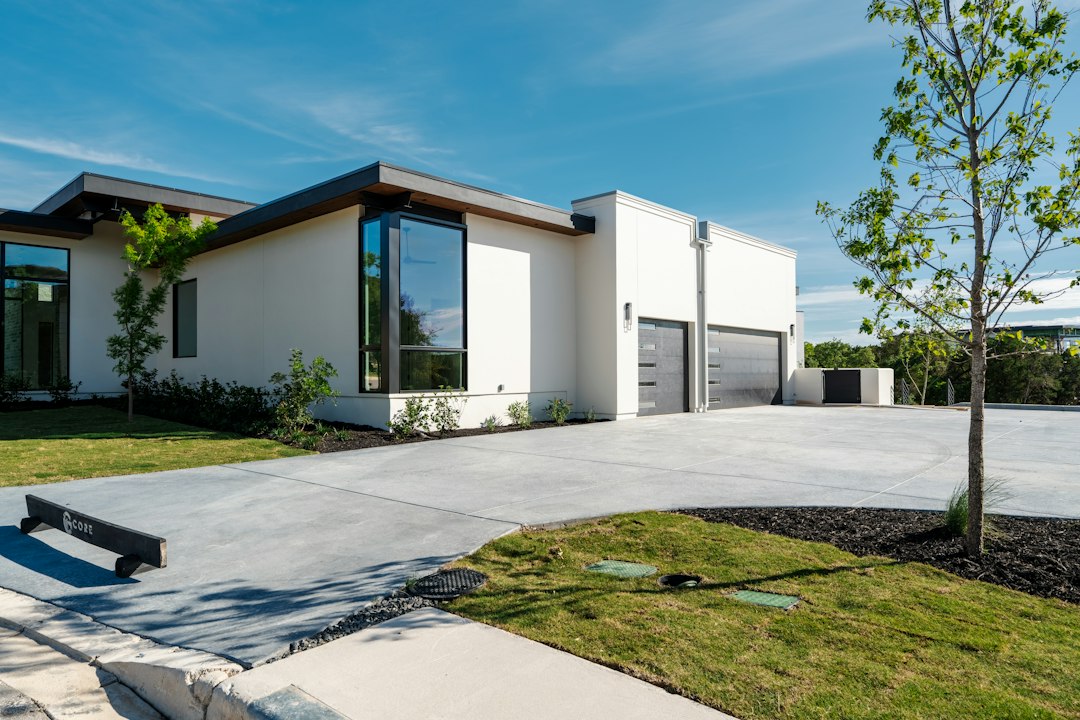
When homeowners compare concrete driveway estimates, the lowest total can be tempting. But two quotes may describe very different projects. One may include demolition, excavation, base preparation, drainage, and cleanup, while another assumes the existing ground is ready and lists those items as extras.
Driveway costs vary by property, design, access, material specifications, and local labor rates. Instead of relying on a single online price range, use the estimate to understand what work is included and how the contractor plans to build the driveway.
1. Size, Shape, and Layout
Area is an obvious factor, but shape also affects labor and forming. A simple rectangle is generally easier to lay out than a driveway with multiple curves, flares, borders, or transitions. Additional parking bays and turnarounds increase the amount of material and preparation required.
Ask the contractor to confirm the measured area and note the driveway dimensions on the proposal. This gives you a common starting point for comparing bids.
2. Demolition and Disposal
If an existing driveway must be removed, the quote may include breaking up the slab, loading debris, hauling it away, and disposal fees. Access for machinery and trucks can change the time required. Ask whether disposal is included and how the contractor will protect nearby landscaping, curbs, and structures.
3. Excavation and Base Preparation
Subgrade conditions can make a major difference. Soft soil, buried debris, roots, or unsuitable fill may require additional excavation or replacement material. The base must be prepared and compacted according to the design and site conditions. A quote that skips these details may not be comparable to one that specifies the work clearly.
Ask how unexpected ground conditions will be priced and approved. A written change-order process can prevent surprises after the work begins.
4. Slab Design and Concrete Specifications
Thickness, reinforcement, concrete mix, and the expected loads influence the design and material quantities. A driveway intended only for passenger vehicles may have different requirements from one that regularly supports heavy vehicles. The correct specification should reflect the site and applicable design guidance.
Do not assume that thicker concrete is always the only answer or that reinforcement eliminates cracking. The entire system—including base support, drainage, joints, and curing—needs to work together.
5. Drainage and Site Access
Changing the slope, adding a channel drain, moving a downspout, or working on a steep site can add labor and materials. Tight access may require different equipment or more manual work. These details are worth discussing during the site visit because they are difficult to estimate accurately from photographs alone.
6. Finish and Decorative Details
A standard broom finish, colored concrete, stamped patterns, borders, and exposed aggregate have different material and labor requirements. Complex patterns or multiple colors can require extra steps and more experienced finishing. Compare the exact finish, not just the label used in the quote.
7. Permits, Scheduling, and Protection
Local permit or inspection requirements may apply depending on the location and scope. Confirm who is responsible for obtaining approvals and whether fees are included. Weather protection, curing measures, and site cleanup should also be discussed so that the project does not end at the moment the surface is finished.
8. Warranty and Workmanship
Ask what the contractor’s written warranty covers, how long it lasts, and what exclusions apply. Concrete can develop cracks even when installed competently, so understand how the contractor distinguishes normal material behavior from a workmanship issue. Verify insurance and ask for references from similar projects.
Compare Estimates Side by Side
Use a checklist to compare demolition, excavation, base material, compaction, concrete specifications, reinforcement, forms, jointing, finish, drainage, cleanup, permits, and warranty. Confirm the payment schedule and how changes will be documented. If one quote is much lower, ask what is excluded before deciding that it is a better deal.
Buy Clarity, Not Just a Number
A good estimate explains how the driveway will be built and what happens if site conditions change. Request a written scope, compare equivalent specifications, and give proper attention to base preparation and drainage. A transparent proposal makes it easier to evaluate value and reduces the chance of disputes once construction is underway.
Leave a Reply