
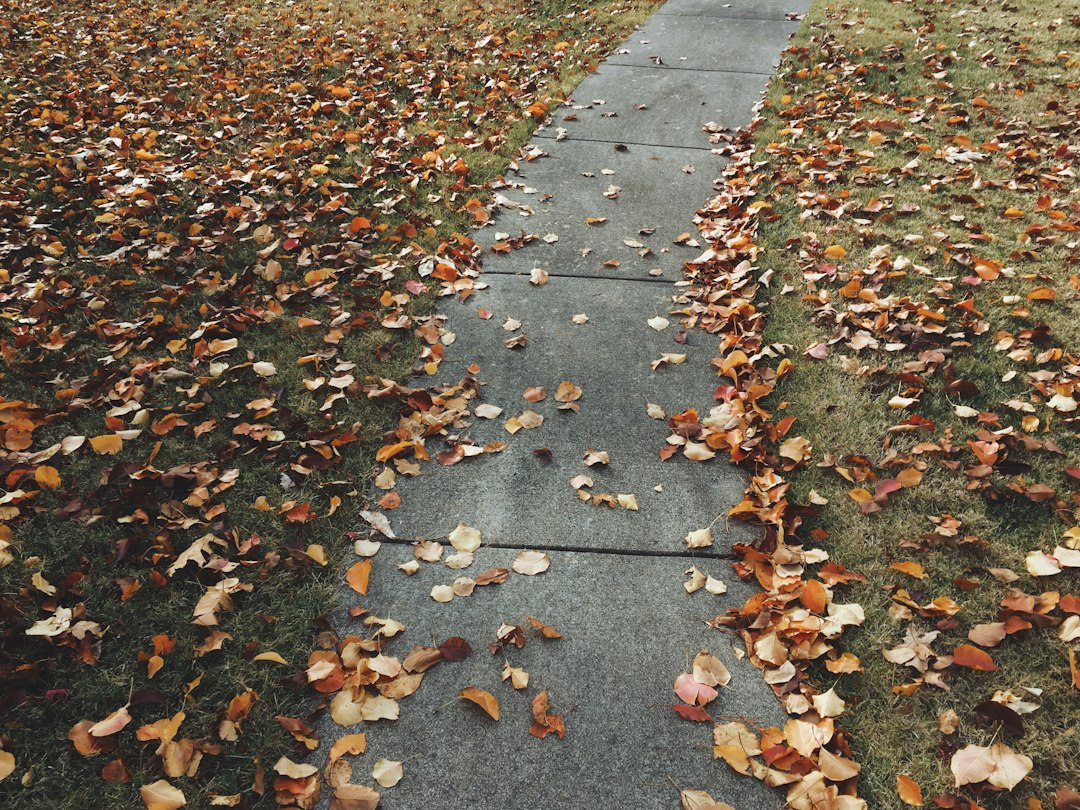
For homeowners in Rockland County, fall is a practical time to look over concrete surfaces before colder weather settles in. Water can enter small openings, freeze, expand, and contribute to surface damage over repeated freeze-thaw cycles. Leaves and debris can also hide cracks, hold moisture, and make walkways slippery.
A seasonal inspection cannot prevent every problem, and not every crack needs the same repair. But a careful walk around the property can help you identify changes early, reduce avoidable moisture exposure, and decide which issues deserve professional attention before winter.
1. Clear leaves and debris from the surface
Start by sweeping driveways, front steps, sidewalks, and patios. Wet leaves can become slick underfoot, and piles of organic debris can keep areas damp or conceal small defects. Pay special attention to shaded sections and places where leaves collect against the house or along garden edges.
Use a broom or a suitable leaf blower, then check the surface again in good light. Avoid aggressive tools or harsh chemicals that could damage the concrete or its finish.
2. Look closely at cracks that have changed
Small cracks can occur for several reasons, including shrinkage, movement, settlement, or environmental stress. The key is to note whether a crack appears new, is widening, has uneven edges, or is accompanied by a change in the height of the slabs. Photographing a crack and recording its approximate width can help you compare it later.
Do not assume every crack is structural, but do not automatically dismiss a changing one either. Cracks that grow quickly, cross several sections, or appear alongside settlement deserve a qualified assessment.
3. Check whether water drains away from concrete
Look for low spots where rainwater regularly collects on a driveway, walkway, or patio. Standing water can make surfaces slippery and may find its way into joints or cracks. Also observe where roof runoff discharges and whether downspouts send water toward slabs or foundations.
Do not try to correct a significant slope problem with a quick surface patch. Drainage may involve grading, downspout extensions, or other site-specific work. If water collects near the foundation or enters the basement, investigate promptly with an appropriate professional.
4. Inspect joints and the edges of slabs
Control joints and expansion joints serve different purposes, but both are worth checking. Look for missing or deteriorated joint material, soil washing out at edges, and gaps where water or debris accumulates. Damaged joint sealant may be repairable, but the correct material and preparation depend on the joint and the concrete system.
Do not fill every joint with rigid patching compound. Joints may be intended to accommodate movement, so an unsuitable repair can fail or create new stress points.
5. Check steps and walkways for trip hazards
Walk the main routes to your entrance, garage, mailbox, and outdoor living areas. Look for lifted slab edges, uneven steps, loose handrails, surface scaling, and places where ice may collect. A small height difference can become more hazardous when the surface is wet, snowy, or icy.
Mark the location of any trip hazard and keep the route clear while you arrange a repair. If a step is moving or a slab has settled substantially, seek professional advice rather than covering the problem with a thin layer of material.
6. Review old patches and surface flaking
Look for patches that are separating, areas where the top layer is flaking, and spots where aggregate is becoming exposed. Surface deterioration can be related to moisture, freeze-thaw exposure, finishing practices, deicing products, or other factors. Appearance alone may not reveal the cause.
Take photos and note whether the damage is limited to one spot or widespread. A contractor can help distinguish a surface-level repair from a deeper issue. Avoid applying a coating or sealer over loose, weak material without preparing the surface properly.
7. Plan carefully for winter deicing
Before the first icy morning, decide how you will manage snow and ice on concrete. Use a shovel or snow-removal tool that is appropriate for the surface, and follow the concrete installer or product manufacturer’s guidance on deicing materials. Some products and application practices can contribute to scaling or deterioration, especially on vulnerable concrete.
Do not assume that more deicer means safer footing. Apply any approved product according to its label, remove slush when practical, and use traction materials where appropriate. Newly placed concrete may need special protection, so check with the installer if the surface is relatively new.
8. Ask whether sealing is appropriate for your surface
A compatible sealer may help reduce water absorption or protect certain decorative finishes, but sealing is not a universal fix. The concrete must be suitable for the product and properly prepared, and the weather conditions must meet the manufacturer’s application requirements. Applying a sealer too late in the season, over damp concrete, or over a failing coating can lead to poor results.
Check the product instructions for temperature, moisture, curing, and reapplication requirements. If you are unsure what was previously applied, test a small area or ask a concrete professional before treating the entire driveway or patio.
When should you call a concrete professional?
Consider an assessment if cracks are rapidly changing, slabs have shifted, water is moving toward the house, steps are unstable, or surface deterioration is spreading. Share clear photos, describe when you first noticed the issue, and explain whether it changes after heavy rain or cold weather. This information can make an inspection more productive.
For straightforward seasonal care, regular sweeping, sensible drainage management, and early identification of hazards are useful starting points. More serious movement or persistent water problems need a repair plan based on the cause, not just the visible symptom.
A short inspection now can help you plan ahead
Before winter arrives, spend a little time checking the concrete you use every day. Clear debris, document changes, review drainage, and make a plan for safe snow and ice management. These steps will not make concrete immune to weather, but they can help you catch concerns sooner and make more informed maintenance decisions.
Image credit: Ellen Tanner via Unsplash.
Leave a Reply